In recent years, generative AI tools like "ChatGPT" have become a hot topic. They are convenient tools that can complete in a short time work that used to take people hours — writing text, creating images, analyzing data, and more.
The Tokyo Chamber of Commerce and Industry has published a clear, easy-to-follow guide on how small and medium businesses can put this kind of generative AI to use — the "Beginner's Guide to Using Generative AI."
What Is Generative AI?
The guide first explains "what generative AI is."
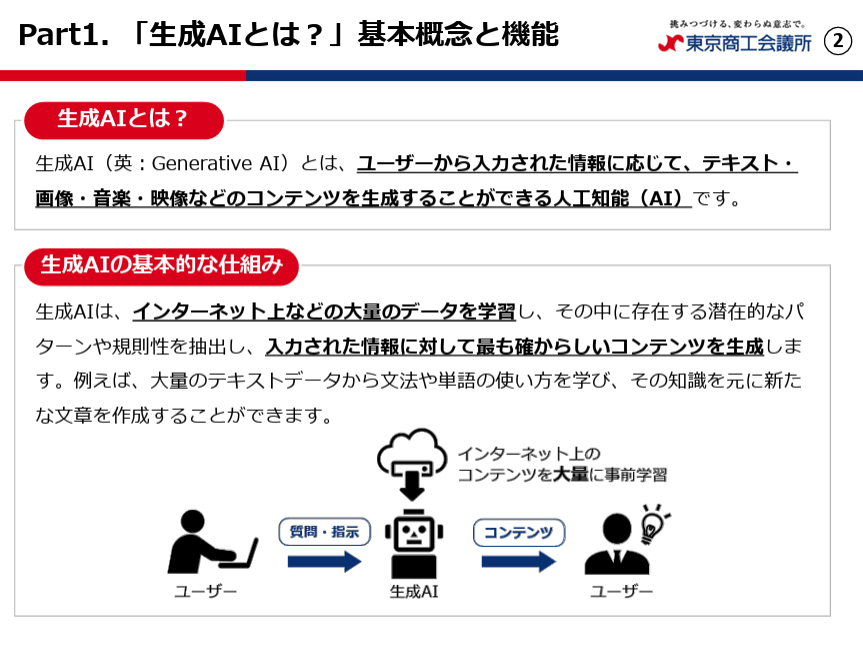
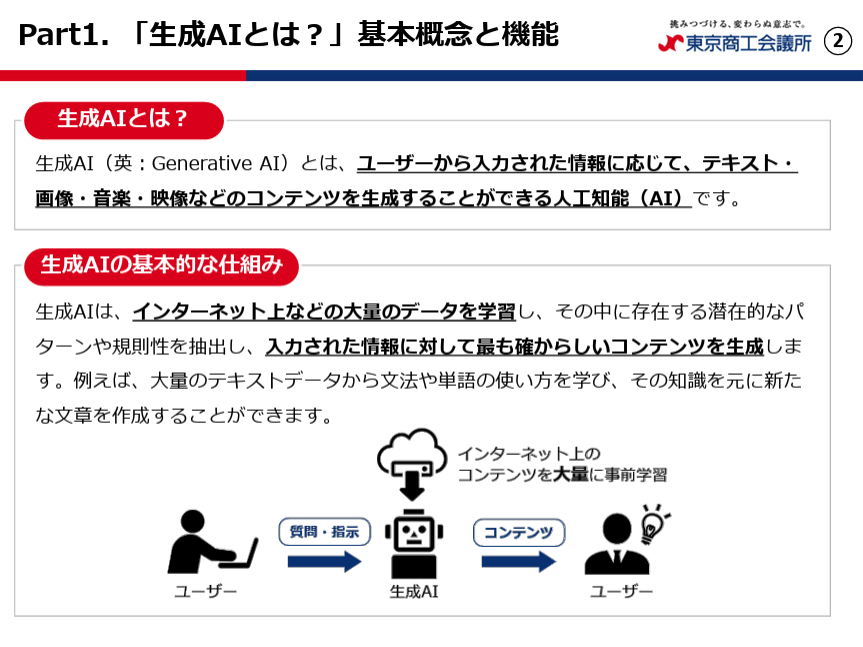
Simply put, it refers to AI that learns from vast amounts of data on the internet and can automatically create new text, images, music, videos, and more.
Representative services include:
Text Generation
Image Generation
- Stable Diffusion (Stability AI)
- Midjourney (Midjourney)
- Bing Image Creator (Microsoft)
- Adobe Firefly (Adobe)
Music Generation
- MusicFX (Google)
Video Generation
- Kaiber (Kaiber)
among others, are introduced.
It's also interesting to note that in Japan, domestic AI offerings such as NTT's "tsuzumi" and NEC's "cotomi" are increasingly available.
Main Ways SMBs Can Use It
How can it actually be used? The guide introduces numerous concrete prompt examples (sample questions) organized by management and operational challenges.
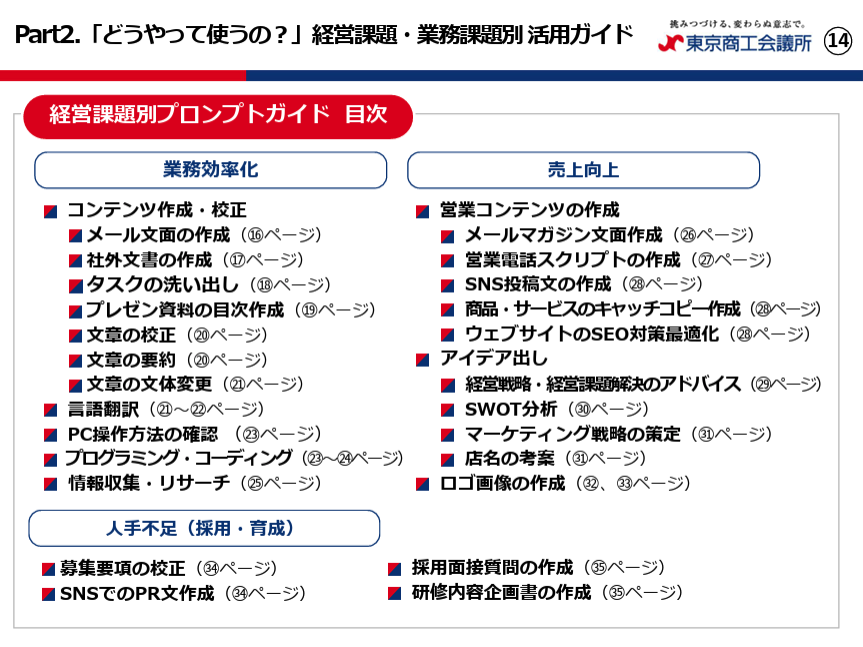
Streamlining Operations
- Drafting emails to send quotes
- Writing external-facing announcements
- Drafting a table of contents for presentation materials
- Proofreading, summarizing, and translating text
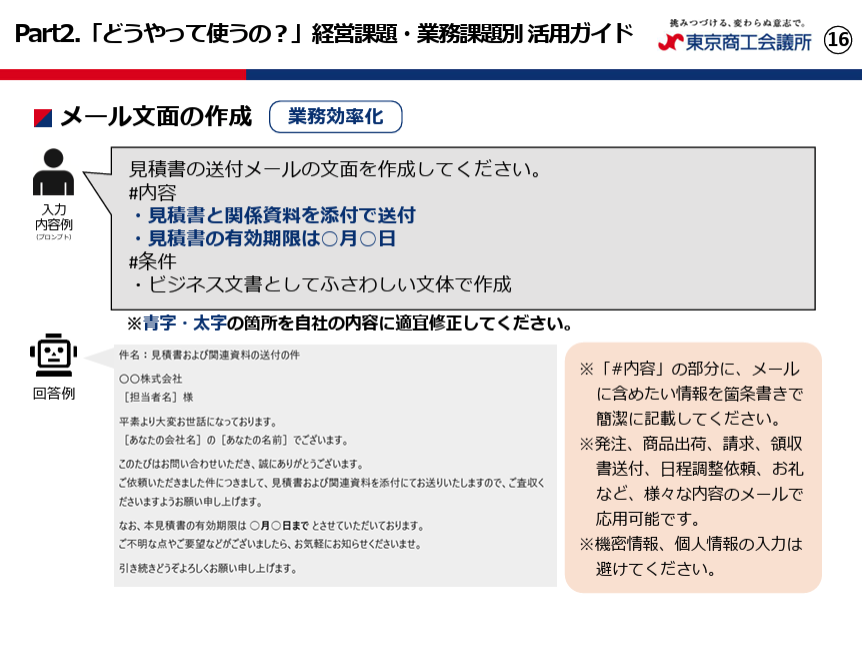
For example, simply instructing it to "put this email that sends a quote into a form suitable for a business document" gets you a finished draft in minutes.
Boosting Sales
- Writing newsletters and social media posts
- Brainstorming product taglines and ad copy
- Website SEO
- Consulting on management strategy and SWOT analysis
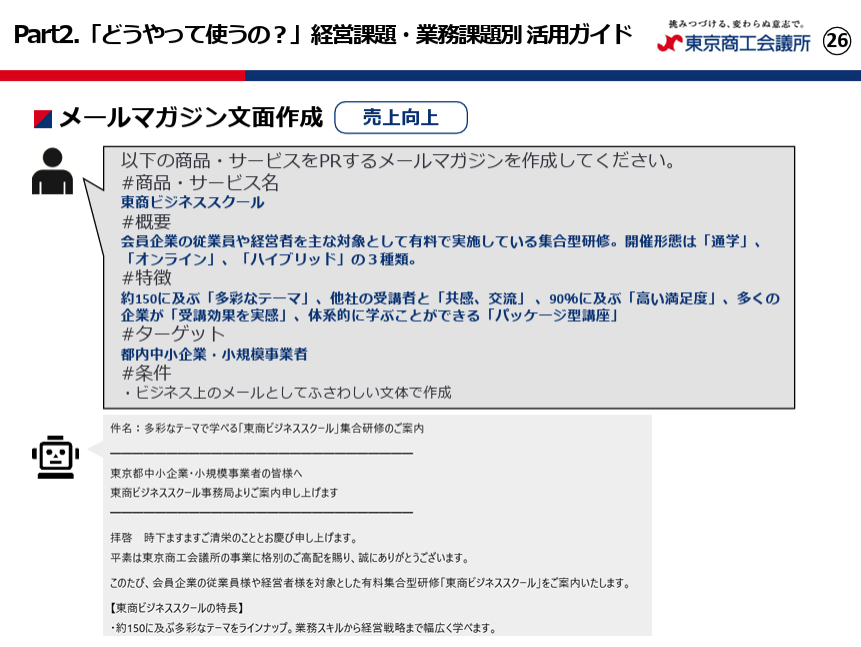
For example, asking it to "come up with five tagline ideas for this product" can even substitute for an in-house brainstorming session.
Labor Shortages (Hiring and Training)
- Proofreading job postings
- Drafting sample interview questions
- Planning training curricula
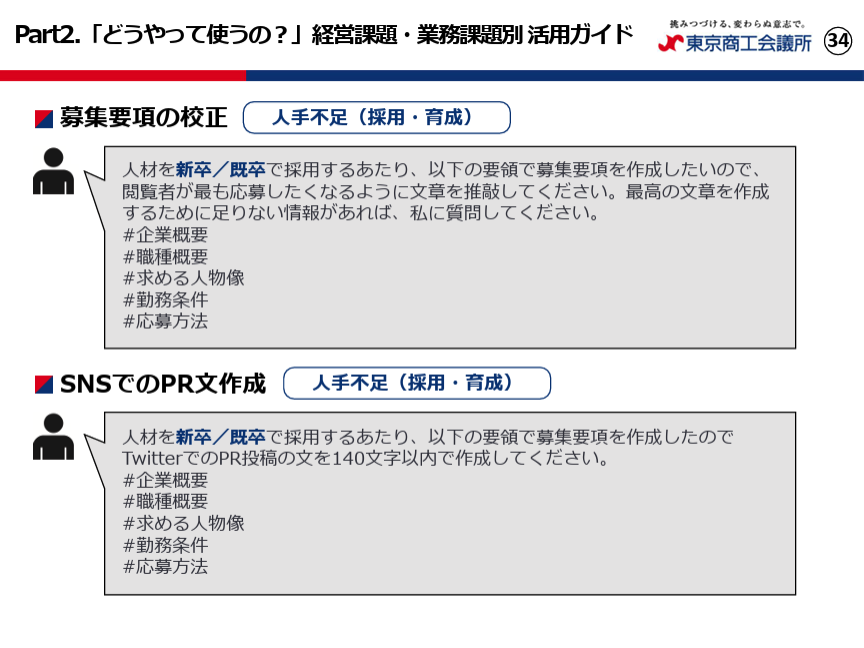
You can also make requests like "rewrite this new-graduate job posting so it makes people want to apply."
Real-World Case Studies
The guide also includes real examples from small and medium businesses.
- Manufacturing (10 employees): Uses ChatGPT for market research and brainstorming new business ideas
- Retail (2 employees): Uses it to write taglines and draft requests to outsourcing partners
- Wholesale, sports apparel: Writes ad copy and social media posts quickly, also cutting costs
What all these cases have in common is that rather than "handing the whole answer over to AI," they "have humans pick and choose from the ideas AI generates."
Points to Watch Out For
Of course, along with the convenience come a few caveats.
- Accuracy of information: AI can produce "answers that sound plausible but are wrong (hallucinations)." Fact-checking is always required.
- Never enter confidential information: Don't input customer data or internal financial information.
- Copyright and trademark risk: Generated content may resemble existing work, so check before commercial use.
- Establish internal guidelines: It's recommended that companies create rules so all employees can use AI safely.
Conclusion
This guide is a great first step for small and medium businesses thinking about "how they should bring AI on board."
You can feel real benefits even starting with small tasks, like "cleaning up an email draft" or "coming up with a tagline."
Generative AI isn't a cure-all yet. But used correctly, it should become a catalyst for higher productivity and new ideas.
👉 If you're interested, be sure to check out the "Beginner's Guide to Using Generative AI for Small and Medium Businesses" published by the Tokyo Chamber of Commerce and Industry.