Screenshots show the official pages on the capture date and may differ from the pages at publication. Select an image to enlarge it.
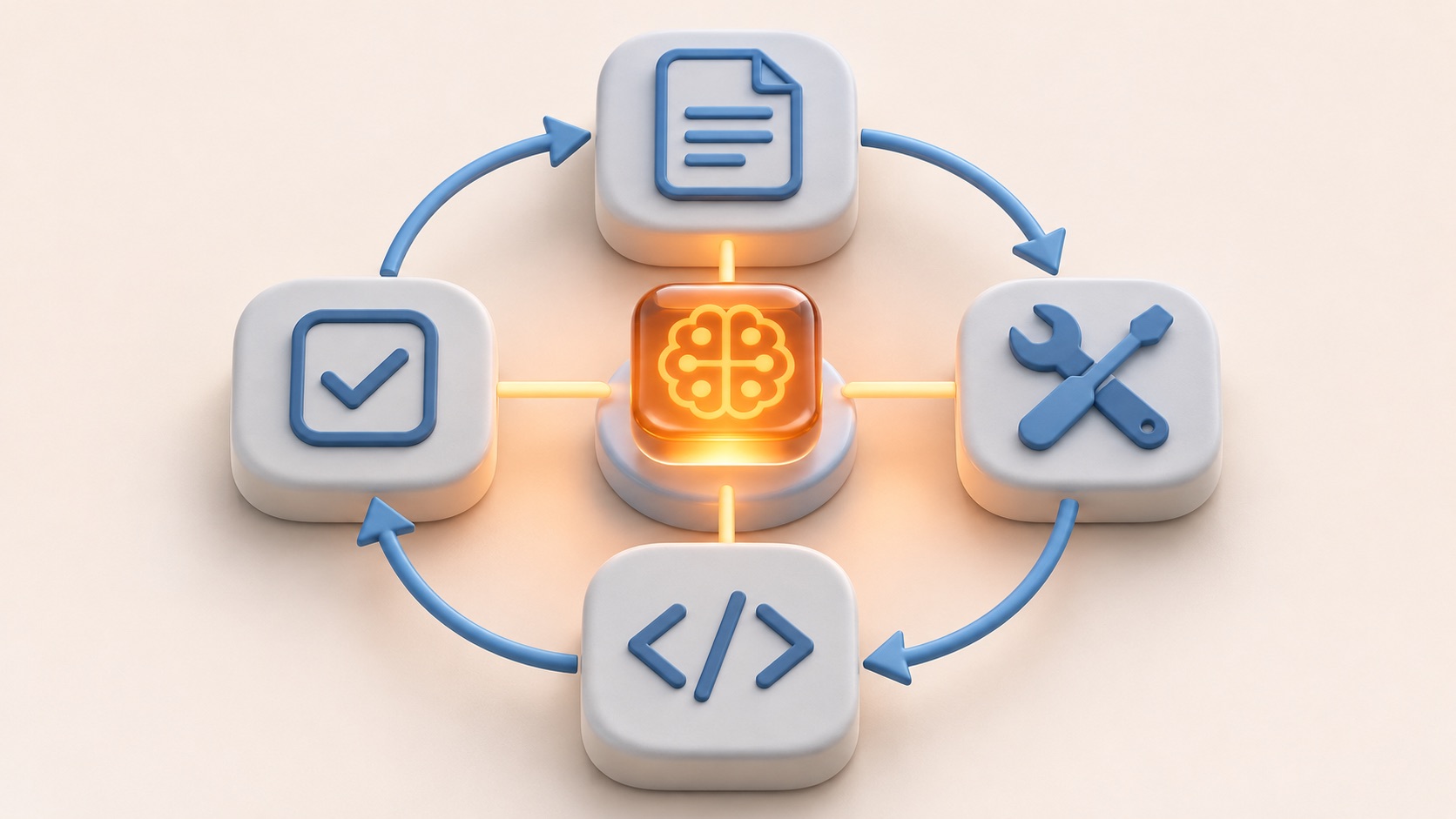
On November 9, 2026, Meta released the AI model "Muse Ember." It is the smallest and most efficient model in the Muse series. It is built for the work AI agents repeat many times a day, such as calling external tools, small programming tasks, routing work, extracting information and reading long documents.
Its role in the Muse series
Meta explains that the Muse models should be used for different jobs, as follows.
- Muse Wonder, for the hardest problems
- Muse Spark, for programming and agent work
- Muse Ember, for handling large volumes of routine tasks
For difficult work, Meta recommends a combination in which Muse Wonder makes the plan and Muse Ember takes on the large volume of actual work. Muse Ember is the first model trained using the higher-end Muse Wonder Full. Besides text, it can also understand images, audio and video.
Performance and pricing
In evaluations published by Meta, Muse Ember beat Anthropic's "Claude Haiku 5.5" and OpenAI's "GPT-6 Luna," both in the same small-model class, on many measures (all with reasoning set to maximum, listed in the order Ember / Haiku 5.5 / GPT-6 Luna).
- Business automation (AutomationBench), 37.8 / 13.9 / 20.2
- Computer use (OSWorld 2.1, with partial credit), 69.5 / 68.9 / 50.5
- Overall index for coding agents (Coding Agent Index), 46 / 37 / 31
On the overall index from the independent firm Artificial Analysis, it scored 36, the same as Haiku 5.5. On the other hand, on difficult programming tasks (FrontierCode 2.0) it scored 27.2, below Haiku 5.5's 34.9. Meta says it matches Haiku 5.5's best results at about one-third of the cost.
For inputs of up to 200,000 tokens, pricing is $0.10 per 1M input tokens and $0.50 per 1M output tokens. For longer inputs beyond that, it is $0.30 for input and $1.50 for output. Compared with the higher-end Muse Spark 1.3 ($1.25 input, $4.25 output), the input price is about one-twelfth. The amount of text it can handle at once (its context) is 1M tokens, and a single output can be up to 512,000 tokens.
Where you can use it
Muse Ember is available as the model name "muse-ember-1.0" in Meta's API, the "Meta Model API," and its development tool "Muse Code." At the same time, Muse Ember, Muse Spark and Muse Wonder also became available through Google Cloud and Oracle Cloud. Meta's announcement does not say it will be released as open weights that anyone can download. It also does not say whether it can be used in the consumer Muse app.
CoAI's take
With AI agents, a single request can trigger dozens or even hundreds of model calls behind the scenes, which makes cheap, fast small models increasingly important. Muse Ember is built for the way agents are made today, with the work split so that a top model plans and a small model does the work.
However, many of the published evaluations were measured by Meta itself or by evaluation firms, and they include Meta's internal evaluations. If you are thinking of switching from Haiku 5.5 or another model, the safest approach is to compare accuracy and cost on your own tasks before deciding.